
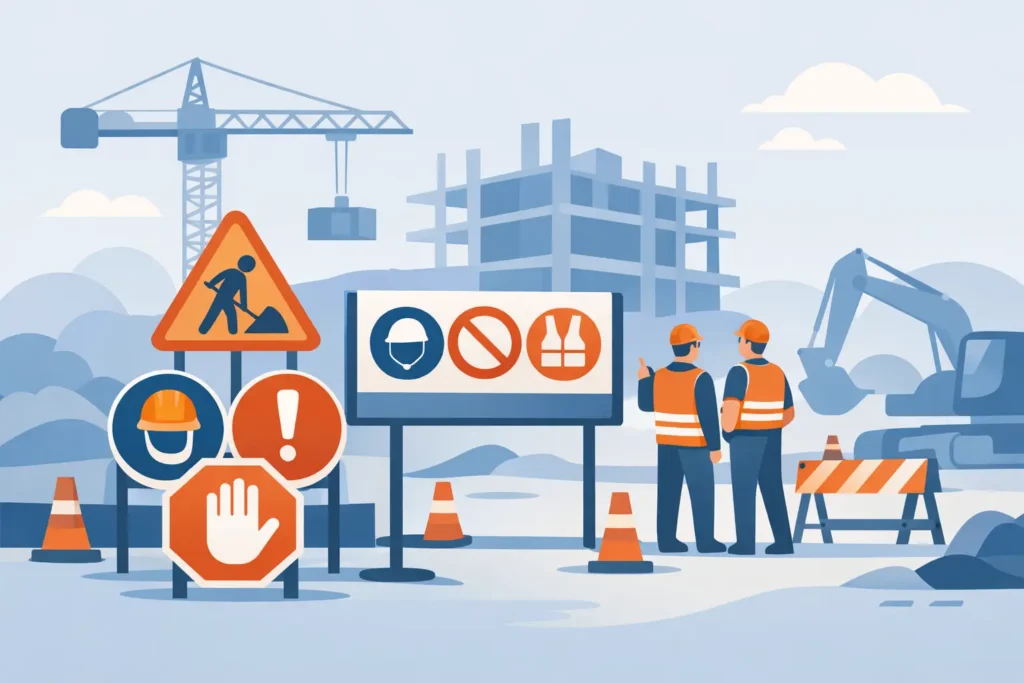
A construction site can change by the hour. A delivery route closes, an excavation opens, a subcontractor arrives before sunrise, or a public sidewalk needs to shift around the work zone. This construction site signage guide helps contractors, developers, and facilities teams plan signs that keep people informed, protect the jobsite, and present a professional image from groundbreaking through closeout.
Good jobsite signage is not just a requirement to check off before work starts. It is an operating tool. The right signs direct traffic, identify hazards, communicate site rules, reinforce accountability, and make it easier for crews and visitors to know where they belong. When signs are unclear, missing, or poorly placed, the result is confusion that costs time and can create real safety exposure.
Start With the Site, Not the Sign
The best signage plan begins with a walkthrough. Before choosing materials, colors, or mounting methods, consider how vehicles, workers, visitors, and the public move around the property. Review entry points, staging areas, temporary roads, pedestrian paths, fencing, office trailers, laydown yards, and areas where conditions will change as the project progresses.
A sign that is technically visible may still fail if it appears after a driver has already made a turn or if it is blocked by equipment, stacked materials, or parked trucks. Put directional and safety messages where a person needs to make a decision, not simply where there is open fence space.
Projects in Northern Colorado and Southern Wyoming also need to account for wind, sun exposure, snow, mud, and temperature swings. A lightweight temporary sign may be appropriate for a short-duration interior notice, but it is not the right answer for a long-term perimeter installation exposed to high winds. Material selection and installation details should match the environment and the expected life of the sign.
The Core Types of Construction Site Signs
Every project is different, but most sites need a coordinated mix of informational, safety, directional, and branding signs. The goal is not to cover every surface with messages. It is to give the right person the right instruction at the right location.
Site Identification and Project Branding
A project identification sign establishes who is building the project, who owns it, and who to contact when needed. These signs commonly display the project name, developer, general contractor, architect, key partners, and a rendering of the completed property. They can also include leasing information, a project timeline, or required permit details.
For developers and general contractors, this sign is often the most visible public-facing element of the jobsite. It should be readable from the road, aligned with the project brand, and fabricated to remain presentable over months of construction. Faded graphics, warped panels, or a sign installed at an awkward angle can make an otherwise well-managed project look unfinished.
Safety and Compliance Signs
Safety signage communicates rules that protect workers, visitors, and the public. Depending on the site, that may include personal protective equipment requirements, restricted-area warnings, fall hazards, overhead work, excavation notices, electrical hazards, emergency contacts, and first-aid locations.
Use familiar colors, symbols, and wording where applicable, and confirm requirements with the project safety manager and the authority having jurisdiction. Regulatory needs can vary based on the work being performed, the property type, and local conditions. A sign provider can produce the required visuals, but the contractor remains responsible for ensuring messages and placements meet the project’s safety plan.
Directional and Traffic Control Signs
Large sites become more efficient when routes are obvious. Clear signs can separate employee parking from visitor parking, guide deliveries to a check-in area, mark truck entrances and exits, identify trailer locations, and keep pedestrians away from active equipment zones.
Directional signs need large type and simple instructions. A driver in a loaded truck should be able to understand a message at a glance. Avoid combining too many destinations on one panel, especially where vehicles have limited space to slow down or turn around. If delivery traffic regularly backs up at an entrance, the solution may be a better sign sequence rather than a larger single sign.
Access Control and Site Rules
Construction sites need to make boundaries clear. Signs such as “Authorized Personnel Only,” “All Visitors Must Check In,” “No Trespassing,” and “Hard Hats Required Beyond This Point” set expectations before someone enters an active area.
These signs are particularly useful at gates, temporary openings in fencing, and transition points between public and restricted areas. For projects near occupied businesses, schools, healthcare facilities, or multifamily housing, access control signage should also help protect normal daily traffic from construction activity.
How to Build a Construction Site Signage Plan
A practical construction site signage guide should account for the complete project timeline. Signage needs at demolition are not the same as signage needs during vertical construction, tenant finish, or final turnover. Planning in phases avoids last-minute orders and reduces the risk of outdated signs remaining in place.
Start by assigning one project contact to approve sign copy, branding, and placement. This reduces conflicting instructions from multiple stakeholders. Then create a simple site map that marks each sign location, its purpose, its size, and who is responsible for maintaining it.
For a typical commercial project, your plan should address these five areas:
- Public-facing project identification and any required permit displays.
- Site entry, visitor check-in, parking, delivery, and truck routing.
- Required safety, hazard, and restricted-access messages.
- Emergency information, evacuation directions, and temporary wayfinding.
- Changeable signs for shifting routes, milestones, leasing, or subcontractor coordination.
This plan does not need to be complicated, but it should be reviewed whenever the site layout changes. A temporary arrow sign pointing to a trailer that moved two weeks ago is worse than no sign because it sends people in the wrong direction with confidence.
Choose Materials That Fit the Job
Construction signs must be built for real conditions. Corrugated plastic is economical and useful for short-term notices, directional signs, and interior applications. Aluminum composite panels offer a more rigid, durable option for project boards, fence-mounted graphics, and long-term outdoor messages. Reflective materials can improve visibility for early-morning deliveries or sites with low lighting.
The mounting method matters as much as the panel itself. Fence mounting, post installation, trailer mounting, and freestanding bases each have different advantages. A sign installed on temporary fencing may need reinforced attachment points and a layout that will not sag or pull in the wind. Freestanding signs need appropriate ballast and placement so they remain stable without becoming obstacles.
There is also a trade-off between permanence and flexibility. A large, fully branded project sign may be worth the investment at a multi-year development, while modular panels or replaceable overlays make more sense when tenant names, routes, or schedules are likely to change.
Design for Fast Reading
Construction sites are busy. People do not have time to decode dense copy, decorative type, or low-contrast graphics. Use concise wording, strong contrast, and type sizes that match the viewing distance. A sign intended for pedestrians can carry more detail than one meant for drivers approaching from the street.
Branding should support clarity, not compete with it. A project identification sign can carry polished brand colors and imagery, while a safety or directional sign should prioritize immediate recognition. Keeping those roles distinct helps the whole site look organized.
When multiple companies work on one project, establish a visual hierarchy. The general contractor’s site rules and emergency notices should be easy to distinguish from subcontractor notices, supplier advertisements, or temporary operational signs. Consistent panel sizes, header treatments, and mounting locations can create order even when several stakeholders need visibility.
Installation and Maintenance Are Part of the Work
A sign is only effective when it stays readable, secure, and current. Construction activity can loosen fasteners, damage panels, cover graphics with dust, or block sightlines. Assign regular sign checks as part of site housekeeping, particularly after high winds, major deliveries, fencing changes, and route adjustments.
Remove obsolete signs promptly. Old safety notices, outdated contact information, and conflicting arrows undermine confidence in every message on the site. Keeping an extra set of commonly used temporary signs on hand can also prevent delays when conditions change quickly.
For complex projects, working with one signage partner from planning through installation can reduce handoffs and help maintain consistency across project boards, safety signs, fence graphics, trailer signs, and final tenant or building signage. Action Signs can help project teams coordinate durable, custom jobsite signage with the practical installation details already considered.
A well-signed jobsite feels controlled before anyone steps through the gate. That confidence protects your crew, helps visitors move with purpose, and gives the public a clear view of a project being built with care.


