
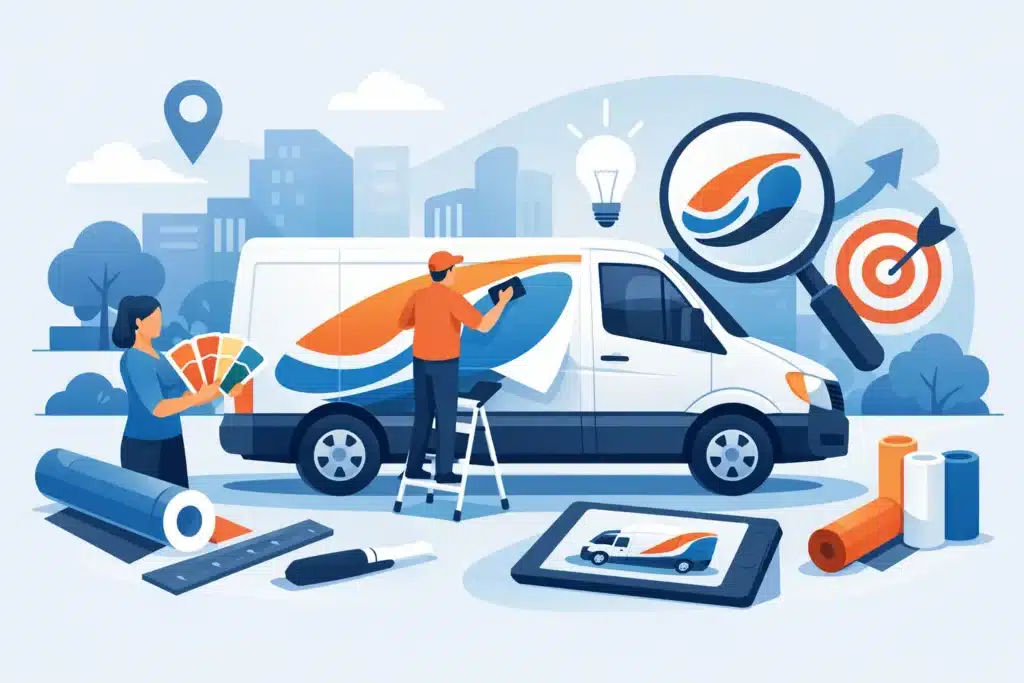
A service van parked at a customer’s home, outside a jobsite, or in a busy grocery store lot is seen by more people than most businesses realize. The question of how to brand service vans is not just about adding a logo to a door. It is about making your company easy to recognize, easy to contact, and credible at a glance wherever your crews work.
For contractors, HVAC companies, plumbers, electricians, restoration teams, delivery services, and field-based businesses, vehicle graphics can turn necessary operating expenses into a steady source of local brand exposure. The strongest van branding does that job without becoming cluttered, hard to read, or difficult to maintain.
How to Brand Service Vans With a Clear Purpose
Start by deciding what each van needs to accomplish. A service van is not a brochure, and it does not need to explain every service your company provides. Its primary job is usually to establish who you are, what you do, and how a prospective customer can reach you.
For a growing service business, the priority may be generating calls in the neighborhoods where crews work. For an established company, the goal may be consistency across a larger fleet, stronger recognition at jobsites, or a more professional appearance for franchise and commercial accounts. Those objectives affect the design, the amount of coverage, and the information included.
At minimum, most service van graphics should clearly show your company name or logo, a concise description of the service, a phone number or website, and a recognizable brand color system. If your name does not immediately tell people what you do, the service description becomes especially important. “Electrical Contractor,” “Commercial Roofing,” or “Emergency Restoration” answers the question quickly.
A call to action can help, but keep it useful. A simple message such as “24/7 Emergency Service” or “Free Estimates” may be worth including when it is a meaningful part of your offering. Trying to fit several promotions, certifications, social media handles, and a long list of services onto every panel usually makes the van less effective.
Design for Recognition at Road Speed
People often see service vans while driving, walking a dog, or passing through an intersection. They may have only a few seconds to take in the message. That makes hierarchy more valuable than decoration.
Your logo or company name should be the dominant element. The service category should be the next easiest message to find, followed by your phone number or web address. Use high-contrast colors and lettering that remains readable from a distance. A dark logo on a dark vehicle, thin lettering, or overly detailed illustrations can look good on a computer screen but disappear in real conditions.
Vehicle shape matters. Cargo vans have broad side panels that can carry a bold message, while rear doors offer a practical location for contact information because they are visible in traffic. Windows, door handles, body lines, fuel doors, sensors, and sliding doors all need to be accounted for before production. A good layout works with these obstacles instead of treating them as an afterthought.
Photography and large custom illustrations can be effective when they support the brand, especially for restoration, landscaping, or home services companies. But they need to be purposeful. For many professional service fleets, a confident logo, clean color blocks, and well-planned typography create a more durable and recognizable look than a busy design trend.
Keep fleet graphics consistent, not identical
If your company operates several vehicle types, consistency does not mean forcing the same layout onto every van, pickup, trailer, or box truck. Each vehicle has different usable panels and viewing angles. The colors, logo treatment, typography, and message hierarchy should stay consistent, while the composition adjusts to fit the vehicle.
This approach is particularly useful when adding vehicles over time. A documented graphics standard helps ensure that the fifth or fifteenth van still looks like it belongs to the same company.
Choose the Right Level of Coverage
There is no single answer to whether a service van needs a full wrap, partial wrap, or cut vinyl lettering. The right choice depends on your budget, vehicle condition, brand goals, and how long you expect to keep the van in service.
A full wrap covers most painted surfaces and creates the largest visual impact. It is a strong choice for companies that want a highly visible fleet, need to transform a mixed set of vehicle colors, or have a design that relies on large graphics. Full wraps also add a layer of surface protection, although they are not a substitute for proper vehicle care.
Partial wraps use printed vinyl across selected sections, often paired with cut lettering and logos. They can provide much of the visual impact of a full wrap while controlling cost. Smart placement along side panels, rear doors, and portions of the hood can make a partial wrap look intentional rather than incomplete.
Cut vinyl graphics are often the most economical option for a clean, professional presentation. They work well for businesses with simple branding, newer vans in a consistent color, or fleets that need straightforward identification. The trade-off is less visual coverage and fewer options for photographic or heavily custom graphics.
Before choosing coverage, consider the vehicle’s age and paint condition. Vinyl adheres best to sound factory paint. If a van has peeling clear coat, rust, body damage, or recent paintwork that has not fully cured, address those issues first. Installing graphics over failing surfaces can create poor results and make future removal more difficult.
Select Materials Built for Working Vehicles
Service vans face a tougher environment than most signage. They see sun, snow, road salt, gravel, pressure washing, frequent door use, and long hours on the road. Material quality and installation technique directly affect how the finished graphics perform.
Cast vinyl films are commonly used for full and partial wraps because they conform well to curves, rivets, and recessed areas. Premium overlaminates protect printed graphics from UV exposure, moisture, abrasion, and everyday washing. For simpler lettering and logos, durable cut vinyl may be the right fit.
The lowest upfront price is not always the lowest long-term cost. Lower-grade films can fade, shrink, lift at edges, or become difficult to remove before the vehicle is ready for replacement. That can lead to a fleet that looks inconsistent or requires earlier rework.
Installation matters just as much as the vinyl selection. Thorough surface preparation, accurate measurements, proper panel alignment, and careful work around seams and hardware help graphics stay secure and look finished. For businesses that rely on their vehicles daily, schedule installation around operational needs and allow enough time for the work to be completed correctly.
Plan the Project Before the Van Arrives
The most efficient fleet branding projects begin with a few practical decisions before design enters production. Confirm the exact year, make, model, roof height, and door configuration for each vehicle. Two vans that look similar can have different panel dimensions, window placement, or rear-door layouts.
It also helps to establish who approves artwork and what brand assets are final. Send current logo files, approved brand colors, existing marketing materials, and any required licensing, trade, or regulatory information early in the process. If your business serves multiple territories or has location-specific phone numbers, clarify which details belong on which vehicles.
Before approving the proof, review it for more than appearance. Check spelling, phone numbers, website addresses, license numbers, and service claims. Confirm that the design remains readable on both sides and at the rear. Ask how graphics will interact with cameras, sensors, door seams, and windows.
For fleets of four or more vehicles, a practical pre-installation checklist can prevent expensive corrections:
- Verify vehicle models, colors, and condition before materials are ordered.
- Approve one final artwork version with designated decision-makers.
- Identify any DOT, contractor license, franchise, or local requirements.
- Set an installation schedule that keeps enough vehicles available for service calls.
Think Beyond the Initial Installation
Branded vans need ongoing attention, especially in Northern Colorado and Southern Wyoming where weather, road treatment, and temperature swings can be hard on vehicles. Regular washing removes road film and salt that can dull graphics and collect along edges. Use cleaning methods appropriate for vehicle vinyl, and avoid directing high-pressure water too closely at seams or lifted edges.
Inspect graphics during routine vehicle maintenance. Small issues are easier to address before they spread. A damaged door panel, collision repair, or replacement rear door may require a graphics update, so keeping approved artwork and production records available makes repairs faster and more consistent.
Fleet changes also create opportunities. When your company adds a service line, updates its logo, acquires another business, or expands into a new market, vehicle graphics should be part of the brand rollout plan. Updating vans one at a time without a defined standard can leave customers seeing several versions of your identity for years.
A well-branded service van should make a good first impression before a technician rings the doorbell. It should also make it easier for the next customer to remember who to call. When the design, materials, and installation are handled with the same care you bring to your field work, every route becomes a practical investment in local recognition.


