
A storefront window can do more than let in light. It can identify your business from the street, promote a limited-time offer, add privacy to a lobby, or carry consistent branding across several locations. But installing window graphics is not a simple matter of applying printed vinyl to glass. The choices made before and during installation determine whether graphics look sharp for years or begin peeling, bubbling, and fading far too soon.
For commercial properties in Northern Colorado and Southern Wyoming, window graphics also need to account for strong sun, temperature swings, windblown dust, and the everyday cleaning that busy storefronts require. A well-planned project protects both the visual impact and the useful life of the finished graphics.
Start With the Job the Graphics Need to Do
The best material and installation method depend on the purpose of the graphics. A full-color retail promotion has different requirements than etched vinyl privacy bands in a medical office. A restaurant’s temporary seasonal offer should be easy to change, while permanent storefront branding should be selected and installed for long-term durability.
Before design is finalized, clarify what customers need to see, where they will view it from, and how long it needs to remain in place. This affects graphic scale, color contrast, material selection, and installation approach. Small lettering may look good on a proof but disappear from the parking lot. A dark interior can change the way a perforated window film reads from outside. Privacy film that is too opaque may block desirable natural light.
Window graphics are commonly used for storefront identification, promotional messaging, privacy, interior branding, directional information, and safety markings on glass doors. One window can often serve more than one of these purposes, but trying to fit every message into the same area can weaken the result. Clear hierarchy matters. Your business name, primary offer, and required safety elements should not compete for attention.
Choose the Right Window Graphic Material
Vinyl is not one category of material. The right film depends on the glass, expected service life, viewing requirements, and removal plans.
Printed vinyl for branding and promotions
Printed adhesive vinyl is a strong choice for logos, photographs, campaign artwork, and custom color. It can be laminated to improve scratch resistance, UV protection, and cleanability. For exterior-facing graphics, a protective laminate is often worth the investment, particularly on windows exposed to afternoon sun or frequent weather.
The adhesive matters as much as the print. Permanent adhesive may be appropriate for long-term branding, while removable adhesive is better for changing promotions or leased spaces. Removable does not mean temporary in every condition, however. Heat exposure, surface condition, and installation quality all influence how cleanly a film comes off later.
Perforated window film for visibility and light
Perforated window film creates a one-way visual effect: people outside see the printed message, while occupants retain a degree of visibility looking out. It works well for retail windows where businesses want broad graphic coverage without fully closing off the interior.
There are trade-offs. The effect is strongest when the outside is brighter than the interior, so it can look different after dark. Perforated film also has a shorter expected lifespan than some solid films, especially on exterior glass that receives direct sun and weather. It should be specified carefully around windows that must preserve clear outward views or meet specific building requirements.
Frosted and etched-look films for privacy
Frosted vinyl provides a refined, functional solution for conference rooms, healthcare spaces, offices, and interior glass partitions. It can cover an entire pane or be cut into stripes, logos, and custom patterns. Unlike solid opaque film, it maintains light transmission while reducing visual distractions and creating privacy.
For glass doors and walls, frosted film can also help make transparent surfaces more visible. Building codes and accessibility considerations may require contrasting markings at particular heights, so the graphic layout should be coordinated with the property team early in the process.
Measure the Glass, Not the Architectural Drawing
A window schedule or site plan is useful, but field measurements are essential before fabrication. Actual glass dimensions can vary from drawings, and storefront systems introduce mullions, frames, door hardware, handles, hinges, and uneven surfaces that affect the usable graphic area.
Professional site verification identifies these details before material is printed and cut. It also confirms whether graphics will be installed on the first surface, or exterior side of the glass, or the second surface behind the pane. First-surface graphics are usually brighter and easier to see, but they are exposed to weather and cleaning. Second-surface graphics receive more protection, although glass reflection and tint can affect their appearance.
Measurements should include more than width and height. Installers need to know where graphics align with neighboring panes, how far lettering sits from frame edges, and whether a door opens into the installation area. On multi-location projects, a consistent measurement and approval process prevents one storefront from looking slightly off-brand simply because its windows were treated as an afterthought.
Surface Preparation Determines the Finish
Even premium vinyl will fail early if it is applied over residue. Glass can hold fingerprints, silicone overspray, wax, airborne grease, dust, adhesive remnants, and cleaning product residue that is invisible from a few feet away. These contaminants interfere with adhesion and can create bubbles or edge lift.
The installation team should clean the glass with the appropriate preparation method, remove old decals or adhesive, and inspect for chips, cracks, failing seals, and other conditions that could affect the work. Window graphics should not be used to hide damaged glass without first discussing the underlying issue. If the glass needs replacement soon, installing graphics first can create unnecessary removal and replacement costs.
Temperature and moisture also matter. Adhesive films have manufacturer-recommended application ranges. Cold glass can limit initial tack, while excessive heat can make large graphics harder to control. Exterior installations should be scheduled around wind, rain, and extreme conditions when possible. This is one reason commercial graphics projects benefit from installers who can plan around real site conditions rather than treating every surface the same.
Installing Window Graphics Takes Controlled Technique
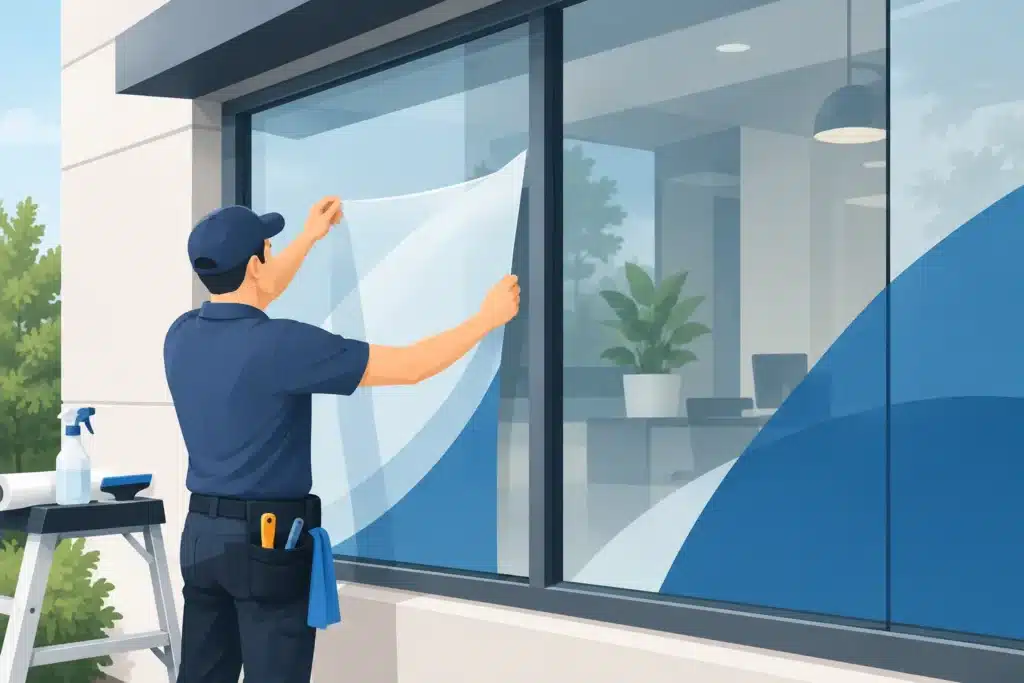
The visual difference between a careful installation and a rushed one is easy to spot. Large panels need accurate alignment, controlled pressure, and a method that avoids trapped air and wrinkles. Graphics that span multiple panes require consistent spacing so the finished image reads as intentional from the sidewalk or street.
Installers may use dry or wet application techniques depending on the material, size, and product specifications. The goal is not simply to get vinyl onto the glass. It is to achieve full adhesion without damaging the print, stretching the film, or leaving contamination beneath it. Edges, corners, door cutouts, and areas near hardware need particular attention because these are the places most likely to lift over time.
Complex projects can include interior and exterior graphics, high windows, operating doors, sidelights, and graphics that must align with wall signs or architectural features. Coordinating design, production, and installation through one accountable partner reduces the handoffs that often cause avoidable errors. At Action Signs, in-house production and experienced installation crews help keep those details connected from approved artwork to final placement.
Plan for Care, Changes, and Eventual Removal
Window graphics are durable, but they are not maintenance-free. Use non-abrasive cleaning methods and avoid aggressive tools or harsh chemicals around film edges. Let newly installed graphics cure according to material recommendations before washing them. If a window is pressure washed, direct spray away from vinyl edges.
Businesses should also plan for change. Promotional graphics need a removal date and replacement plan. Permanent identity graphics should be reviewed when branding, tenant occupancy, or storefront layouts change. Leaving outdated messages on a window can make an otherwise well-maintained business look neglected.
When removal is necessary, it should be handled with the same care as installation. Older films can require controlled heat and adhesive removal methods. Pulling aggressively at brittle vinyl can leave residue, damage the graphic, or create extra labor before the next application.
When Professional Installation Is the Better Business Decision
Small, short-term decals on easily reached interior glass may be manageable for an experienced staff member. The risk increases with large-format graphics, exterior applications, perforated film, multiple panes, specialty films, high windows, and brand-critical installations. A failed installation wastes material, delays an opening, and may leave a storefront looking unfinished at the exact moment customers are forming their first impression.
Professional installation provides more than labor. It brings site assessment, correct material recommendations, accurate production tolerances, safe access equipment when needed, and a clear plan for maintaining the finished work. For franchises, property managers, and growing regional businesses, it also helps preserve brand consistency across locations.
Your windows are valuable communication space. Treat them like a working part of your signage program, and they can keep earning attention long after the installation crew has packed up.


