
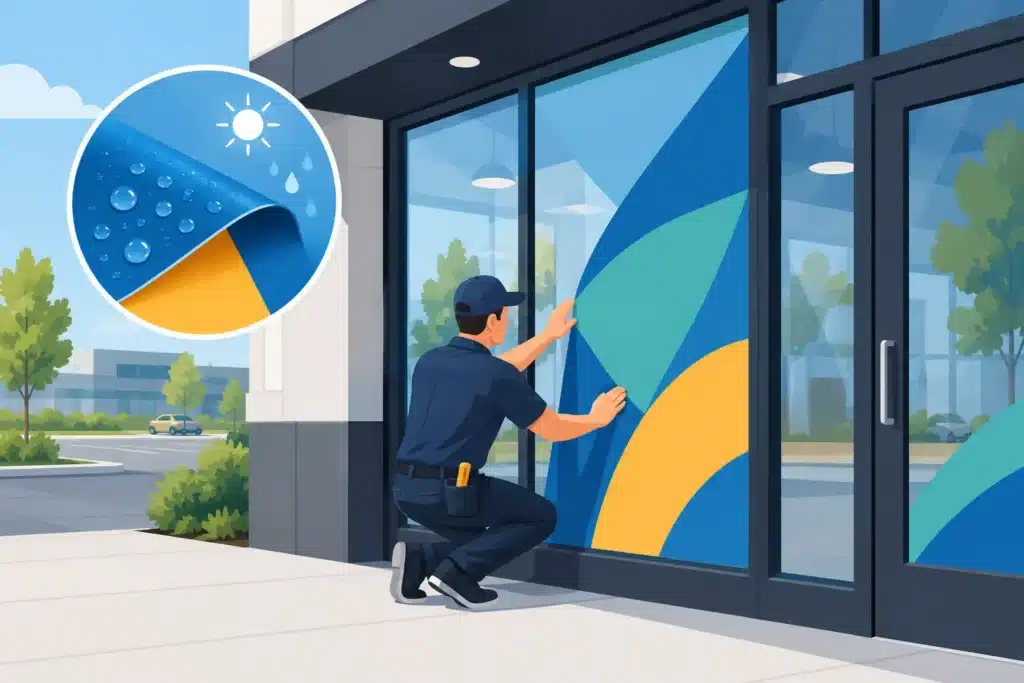
A new storefront can have a well-designed sign above the door and still feel unfinished if the windows are blank. A service fleet can have clean trucks and still miss thousands of daily impressions without clear branding. Printed vinyl graphics fill that gap. They put your logo, message, hours, promotions, directions, or campaign visuals where customers already look.
For commercial businesses, vinyl is not simply a temporary decal material. It is a flexible graphic system that can support storefront branding, fleet identification, interior wayfinding, wall murals, jobsite communication, and seasonal promotions. The best result depends on matching the graphic, material, finish, surface, and installation method to the real conditions it will face.
Where Printed Vinyl Graphics Make a Difference
Vinyl graphics are useful because they can be produced in full color, cut to shape, and applied to a wide range of surfaces. That makes them a practical choice when a business needs branded visibility without the fabrication time or cost of a dimensional sign for every application.
Storefront windows are a common starting point. Window graphics can display business hours, services, logos, privacy treatments, current promotions, or a complete branded look across large panes of glass. Perforated window film is often used when a business wants a graphic visible from outside while preserving a view out from inside. It is effective for certain applications, but it does not have the same visual density or long-term performance as solid vinyl. The right choice depends on visibility priorities, lighting, window condition, and local code requirements.
Vehicle graphics are another high-value application. A logo and contact information on a service van can build recognition over time, while partial wraps and full wraps create a larger, more memorable presence. For contractors, delivery companies, healthcare providers, property managers, and regional service businesses, fleet graphics also help customers identify legitimate employees when they arrive on site.
Inside a facility, printed graphics can turn plain walls, doors, floors, and windows into useful brand or wayfinding tools. A medical office may use wall graphics to reduce confusion in a corridor. A manufacturer may use safety messaging and facility identification. A school, hotel, or office can use custom environmental graphics to create a more finished experience for visitors and staff.
Construction sites and commercial properties benefit from printed vinyl as well. Site signs, leasing graphics, trailer graphics, equipment labels, and temporary directional messages often need to be clear, durable, and produced on a schedule that supports the project. In these cases, the print itself is only one part of the job. Material selection and proper mounting or application determine whether the graphic remains readable through changing weather and jobsite activity.
Choosing Materials for Printed Vinyl Graphics
Not all vinyl is made for the same purpose. A short-term window promotion, a long-term fleet wrap, and a textured interior wall mural should not be approached with one generic material. The film, adhesive, laminate, and ink system need to work together.
Calendared vinyl is often a cost-effective choice for flat, smooth surfaces and shorter-term promotional needs. It can work well for window graphics, temporary campaigns, basic decals, and signs with a defined service life. Cast vinyl is generally more conformable and more stable over time, making it better suited to vehicle contours, rivets, complex curves, and demanding outdoor applications. It carries a higher material cost, but that cost is often justified when failure, replacement, or an inconsistent finish would be more expensive.
The adhesive matters just as much as the film. Permanent adhesive is appropriate for many long-term applications, while removable adhesive may be the better fit for seasonal retail graphics, leased spaces, or campaigns that will change frequently. Removable does not mean risk-free. The condition of the painted wall, glass, or substrate still affects removal and cleanup. A site review can prevent surprises before a large graphic is printed.
Lamination adds protection against UV exposure, moisture, abrasion, and routine cleaning. On a fleet vehicle or exterior surface, a quality laminate helps preserve color and makes the graphic easier to maintain. On an indoor wall graphic in a low-contact area, the protection needed may be different. Choosing only by initial price can lead to faded prints, edge lifting, or premature replacement.
Surface Preparation Is Not Optional
Vinyl performs best on a clean, stable, properly prepared surface. Dirt, wax, silicone residue, loose paint, moisture, and rough texture can all interfere with adhesion. On vehicles, thorough cleaning is especially important around trim, door seams, handles, and other areas that collect road film.
For interior applications, freshly painted walls need adequate cure time before graphics are installed. Some low-VOC paints and stain-resistant coatings can create adhesion challenges even when the surface looks dry. Testing a material or reviewing the paint specification before committing to a large installation is a practical step, particularly for new construction and remodel projects.
Design for Distance, Not Just the Screen
A graphic can look polished in a proof and still fail in the field if the message is too small or the contrast is weak. Business graphics are viewed from sidewalks, parking lots, passing vehicles, hallways, and across a lobby. The primary message should be easy to grasp in the few seconds a customer has to see it.
For a vehicle, that may mean prioritizing the business name, service category, phone number, or web address rather than placing every service in a small block of copy. For a storefront, it may mean making the entry, hours, and primary offer easy to find without covering every piece of glass. For wayfinding, legibility should take priority over decorative effects.
Color also changes by location. A dark design may look strong on a bright monitor but disappear against tinted glass or a shaded building facade. White text can lose impact in glare. Brand colors need to be respected, but the final composition should account for the background, viewing angle, surrounding architecture, and time of day.
Consistent design across locations matters for growing companies. If a franchise, regional service business, or multi-site property group uses different logos, colors, or layouts from one location to the next, customers notice. Creating repeatable artwork standards helps keep future vehicle additions, window graphics, and interior updates aligned with the brand.
Installation Is Part of the Finished Product
Large-format graphics are unforgiving when installed poorly. A print may be accurate, but wrinkles, bubbles, misalignment, overstretched material, or poorly finished edges can make it look temporary. On vehicles, incorrect installation can also shorten the life of the graphic around curves, seams, and high-contact areas.
Professional installation begins with planning. That includes confirming measurements, checking surfaces, coordinating access, identifying weather constraints, and deciding whether installation is best completed on site or in a controlled environment. For fleet work, downtime needs to be part of the conversation. A practical installation plan minimizes disruption while giving the material the conditions it needs to perform.
Exterior graphics in Northern Colorado and Southern Wyoming need special attention. Intense sun, temperature swings, wind, snow, road chemicals, and hail exposure can all affect the useful life of materials. There is no single lifespan that applies to every graphic. A protected interior wall graphic and a truck parked outside year-round face very different conditions. Setting expectations early helps businesses choose the right level of material and protection.
Maintenance Protects Your Investment
Printed graphics need basic care, not complicated maintenance. Regular washing removes grime that can dull the surface and collect around edges. For vehicle graphics, avoid aggressive brushes and harsh chemicals that can scratch laminate or lift edges over time. Hand washing or touchless cleaning is often the safer approach, depending on the material and vehicle use.
Inspect graphics periodically for damage, lifting, fading, or changes to the surface beneath them. Small issues are easier to address before they become a complete replacement project. Businesses should also plan for updates when their phone number, suite number, logo, service offering, or compliance information changes. Old information on a vehicle or storefront is more than a cosmetic problem – it can send customers in the wrong direction.
The strongest vinyl program is not necessarily the one with the most coverage. It is the one that puts the right message on the right surface, uses materials suited to the environment, and is installed with care. Action Signs helps businesses make those decisions with design, production, installation, and long-term service handled as one coordinated process. When your brand needs to be seen at the curb, on the road, or throughout a facility, well-planned graphics keep working long after the installation day.


