
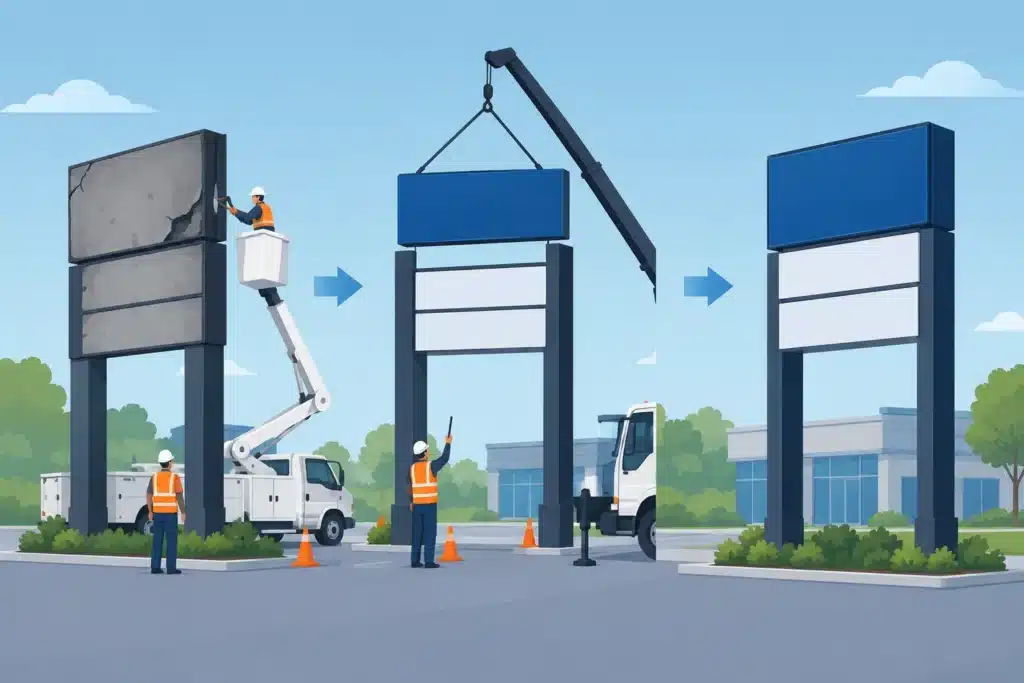
A faded cabinet, broken illumination, outdated tenant panels, or a pole structure that no longer meets code can make a property look neglected long before a customer reaches the front door. The pylon sign replacement process is more involved than swapping one sign face for another. It requires a clear look at the existing structure, local regulations, branding requirements, electrical conditions, and the visibility goals the sign needs to meet.
For businesses, property managers, developers, and franchise operators, a well-planned replacement protects a highly visible asset while reducing surprises during fabrication and installation. The right approach also helps determine whether the project calls for a complete new pylon sign, a structural retrofit, or a more targeted cabinet and lighting upgrade.
Start by Determining What Actually Needs Replacement
Not every aging pylon sign needs to be removed from the ground. In some cases, the existing poles and foundation are structurally sound, and the sign cabinet, faces, tenant panels, or lighting are the real problem. Reusing a viable structure can reduce project cost and shorten the installation timeline.
However, a cosmetic update will not solve corroded poles, water intrusion, unstable footings, damaged electrical components, or a sign that no longer complies with current municipal standards. A site assessment should review the full assembly, not just the visible sign face. That includes the base, poles, cabinet frame, attachment points, access panels, wiring, illumination, and the condition of the surrounding site.
Replacement is often the better long-term choice when a business is rebranding, a shopping center is changing tenants, or the existing sign was built around outdated lighting and display technology. It can also make sense when repairs have become frequent enough that continued maintenance costs outweigh the value of a new system.
Plan the Pylon Sign Replacement Process Before Design Is Final
A successful pylon sign replacement process starts with field information. Accurate measurements, photos, structural observations, utility locations, access conditions, and local sign code requirements should guide the design from the beginning. Designing first and checking the site later is one of the fastest ways to create delays, change orders, or a sign that cannot be permitted as drawn.
For Northern Colorado and Southern Wyoming properties, the sign also needs to account for real operating conditions. Wind exposure, snow, temperature swings, sun fading, and site access all affect material choices and installation planning. A sign at a highway-oriented commercial site may need a different approach than one at a medical campus, neighborhood retail center, or industrial property.
Confirm Zoning, Permits, and Allowable Sign Area
Municipal sign regulations commonly control height, overall square footage, setback, illumination, electronic message features, and the number of tenant panels allowed. A replacement sign is not always treated the same as maintenance, even when it occupies the same general location. If the new cabinet is larger, taller, differently illuminated, or structurally altered, permits may be required.
Older signs can present another issue: they may be legally nonconforming under current code. Replacing them with an identical or larger structure may not be allowed without bringing portions of the installation into compliance. This does not automatically prevent a replacement, but it does affect the available design options.
Early coordination with the local jurisdiction gives the project team time to adjust dimensions, materials, and layout before fabrication begins. It also helps establish whether structural drawings, electrical permits, landlord approval, or engineering documentation will be needed.
Define the Business Goal Behind the New Sign
A pylon sign should do more than display a logo. It should help people find the property, recognize the business quickly, and understand which tenants or services are available. Before selecting colors, cabinet depth, or illumination, determine who needs to see the sign and from where.
A single-tenant business may need a bold, high-contrast identity sign with clear nighttime visibility. A multi-tenant property needs an organized panel system that remains readable as occupancy changes. A franchise location must follow brand standards while still fitting local code and the physical site.
Readability usually matters more than trying to fit too much information into the available area. Letter height, contrast, logo proportions, viewing distance, traffic speed, and lighting all determine whether the sign works in practice.
Choose a Replacement Scope That Fits the Site
There are several common approaches to pylon sign replacement. The best option depends on the condition of the existing sign, the budget, permit requirements, and how much the brand or tenant mix is changing.
A face replacement can be appropriate when the cabinet and structure are in good shape but graphics are outdated, cracked, or faded. New polycarbonate or acrylic faces, updated vinyl, and LED retrofit work can give a sign a significantly cleaner appearance without replacing the entire unit.
A cabinet retrofit replaces the sign body while retaining existing poles or a foundation when they have been verified as suitable. This approach can accommodate new branding, cabinet dimensions, tenant panel configurations, and more efficient illumination while avoiding unnecessary foundation work.
A full replacement involves removal of the existing sign, new structural components, a new foundation or footing when needed, fabrication, electrical work, and installation. It is typically the right path for failed structures, major code changes, a substantially different sign design, or a property redevelopment project.
Digital message centers can also be considered for sites where local code permits them and the communication value is clear. They can be useful for schools, fuel stations, event venues, healthcare facilities, and retail properties with changing promotions. They also require thoughtful content management, electrical planning, and an understanding of local rules for brightness, animation, and message duration.
Fabrication Should Match the Design Intent
A sign rendering is only the beginning. The quality of the finished pylon sign depends on fabrication details that are easy to overlook in a proof. Cabinet construction, welded aluminum components, routed faces, paint finishes, drainage, access for service, LED layout, and wiring methods all influence durability and appearance.
Illumination deserves particular attention. LED retrofits and new LED cabinets can reduce energy use and maintenance compared with older fluorescent systems, but not every retrofit is equal. Even light distribution, serviceable components, proper power supplies, and appropriate face materials help prevent hot spots, dark areas, and premature failure.
For multi-tenant properties, plan for future change-outs as well. A panel system that allows individual tenant updates without rebuilding the entire cabinet can save time and expense over the life of the sign. If tenant turnover is common, this practical detail matters as much as the initial appearance.
Coordinate Removal, Installation, and Site Safety
Installation day is where planning becomes visible. Depending on the scope, crews may need cranes, bucket trucks, traffic control, electrical coordination, concrete work, and temporary access restrictions. The work should be scheduled around customer traffic, tenant operations, weather conditions, and any landlord or property management requirements.
Removal of an old pylon sign should be handled carefully, especially when the structure is deteriorated or energized. The crew must safely disconnect electrical components, remove cabinets or poles in the correct sequence, protect nearby pavement and landscaping, and dispose of old materials responsibly.
A new installation requires precise alignment, secure structural connections, proper electrical connections, and a final review of illumination and graphics. For signs with multiple cabinets or tenant panels, consistent spacing and level installation are critical. Small alignment errors become obvious from the roadway.
Avoid Delays With Clear Decisions Up Front
Most replacement delays come from incomplete site information, late design changes, permit revisions, unavailable brand artwork, or uncertainty about who is responsible for electrical and property approvals. A defined project scope keeps these issues manageable.
Before fabrication is released, confirm the approved design, exact copy, logo files, colors, tenant names, illumination type, responsibility for permits, site access, and installation timing. For leased properties, confirm landlord approval early. For franchise locations, allow time for corporate brand review.
Working with one accountable signage partner can simplify this coordination. Action Signs can manage the work from site review and design through in-house fabrication, installation, and future service, giving regional businesses a clearer path from an aging sign to a finished asset.
A pylon sign is often the first branded element a visitor sees and the last landmark they use when giving directions. Treating its replacement as a planned property improvement, rather than a quick graphic update, helps ensure it remains visible, dependable, and ready to represent the business for years.


